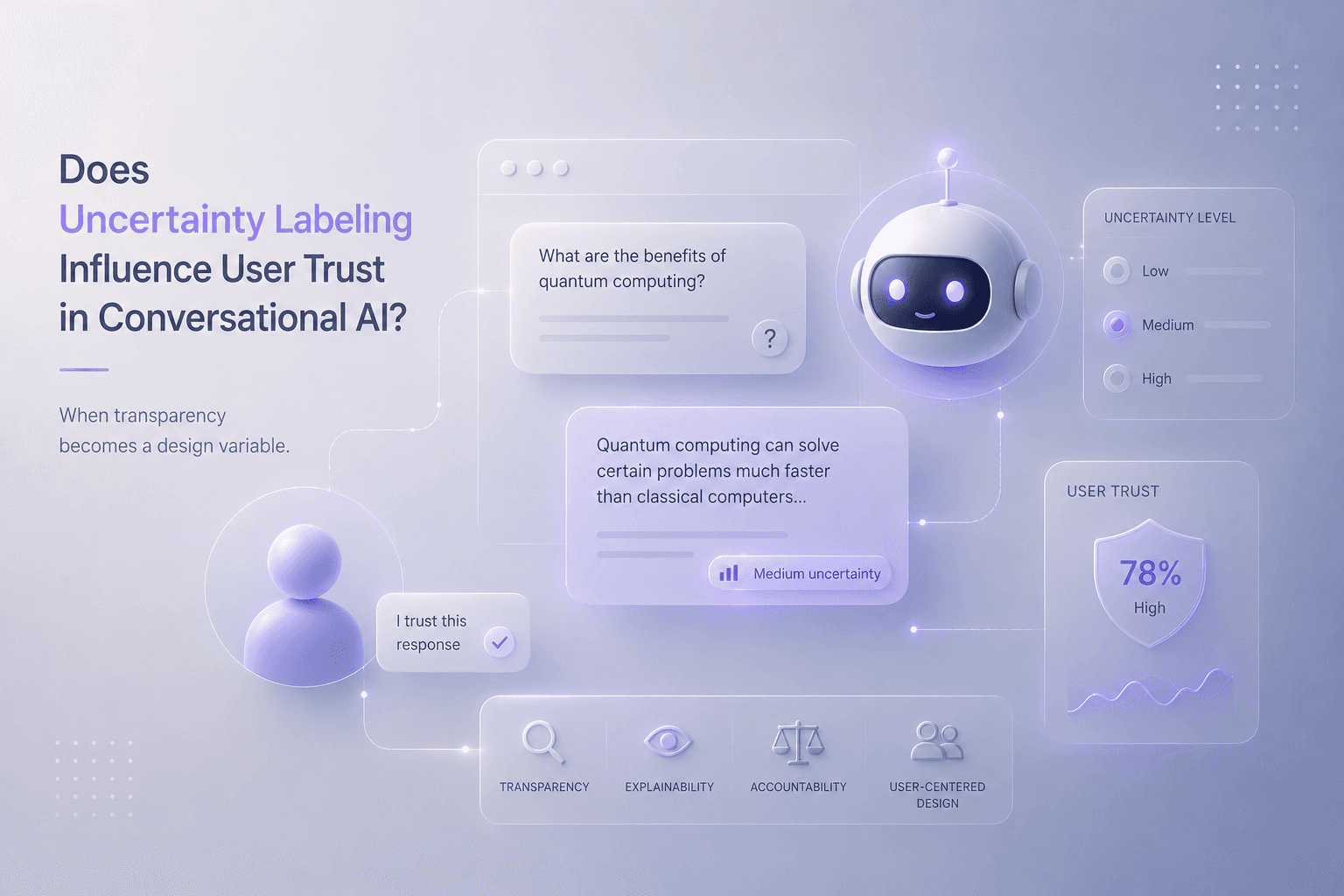

In high-stakes digital environments, trust in AI-generated information directly influences user decisions. Yet transparency mechanisms around uncertainty remain inconsistently implemented.
Project Overview
This research investigates how a visible uncertainty label (“Speculative”) affects user trust, perceived credibility, and decision-making in a conversational AI interface. The textual response remains identical in both conditions. The only manipulated variable is the presence of the uncertainty label. The goal is to isolate the psychological effect of transparency signaling. The study compares two static interface versions of the same AI assistant response:
Research Goal
To examine whether labeling an AI response as “Speculative” influences: Perceived trustworthiness, Willingness to rely on the response, Perceived transparency and Critical evaluation behavior. Rather than measuring whether transparency increases trust, the study explores whether it recalibrates trust.
Research Questions
Does the label increase perceived transparency of the system?
Does the presence of a “Speculative” label reduce reduce blind trust in AI?
Participants
20 general AI users
Ages: 22-58
no formal background in cyber security
Methods
Contextual Interview/ Usability Testing
Participants were instructed to use the think-aloud method while interacting with the interface. They were presented with two conditions:
Version A: a standard AI response without uncertainty cues.
Version B: the same response supplemented with a visible “Speculative” label and an explanatory overlay.
Participants were prompted to articulate their perceptions, interpretations, and trust judgments in relation to each version.
What they notice first
How confident they feel about the answer
Whether they would rely on it
What the interface communicates about system reliability
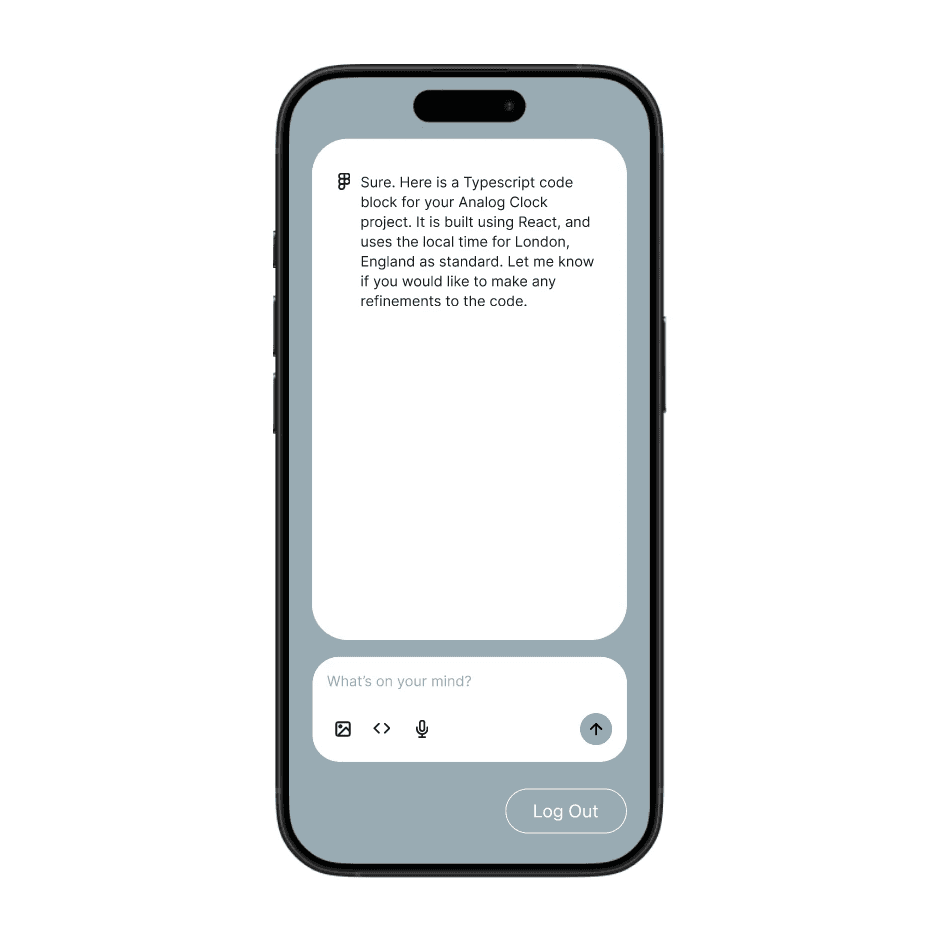
Version A: (no label)
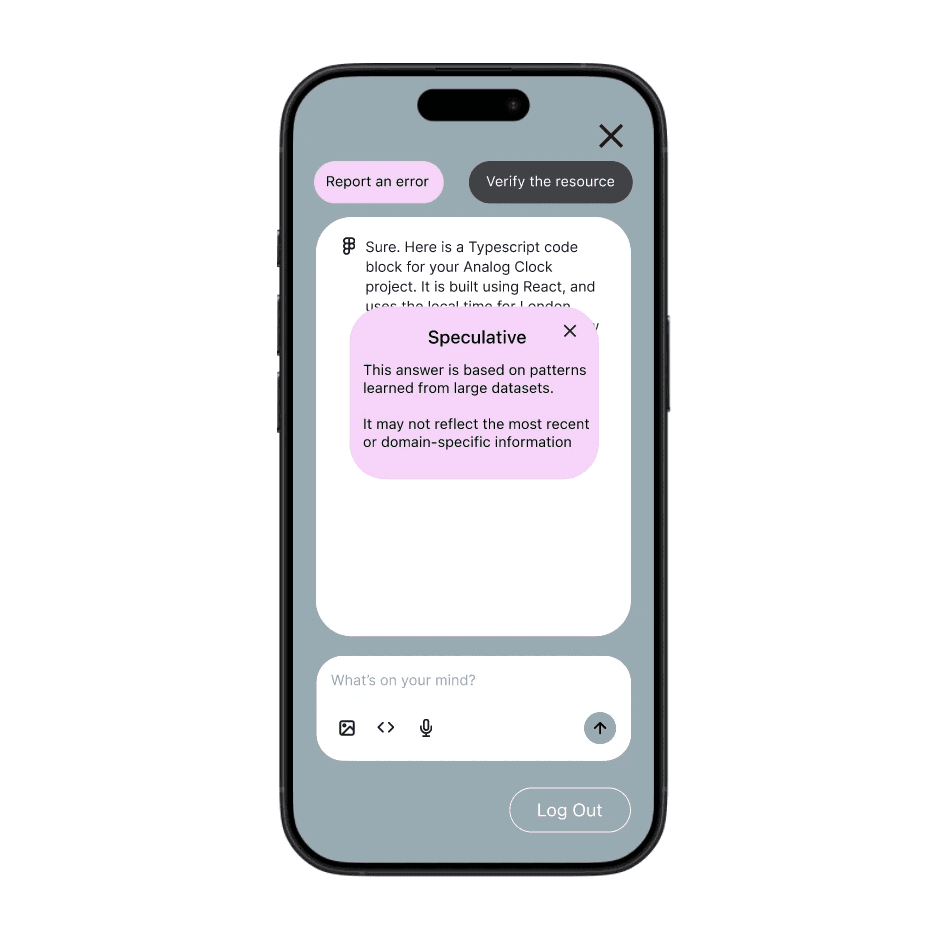
Version B: (speculative label)
Sample questions:
What is your first impression of this response?
Example responses:
Version A: “I don’t see any reason to doubt it.”
Version B: “Now I’m less confident.”
Would you verify this information elsewhere? Why or why not?
Example responses:
Version A: “Probably not”
Version B: “I’d probably Google it”
Do you prefer version A or version B?
Example responses:
Version A: “I guess it might be more comfortable in use”
Verion B: “It's great that it sends warnings, but if many of the responses are speculative, I may stop using this model”
Do users want AI systems to explicitly signal uncertainty during regular interactions?
Response | Number of Users |
|---|---|
Yes | 14 |
No | 6 |
While most participants favored explicit uncertainty labeling, the split in responses reveals an important usability trade-off. Some users value transparency as a trust-enhancing feature, while others may perceive additional labels as unnecessary friction or cognitive overload. This suggests that transparency mechanisms should be carefully designed to support clarity without disrupting conversational flow.
Key Findings
1. Lower blind trust
Even a minimal interface intervention, a single uncertainty label, can significantly influence user perception and decision behavior in conversational AI systems. Participants exposed to the “Speculative” label demonstrated reduced automatic acceptance of the response compared to the control group. The label functioned as a cognitive pause mechanism, interrupting default trust assumptions.
2. Increased Perceived System Accountability
Participants exposed to the label more frequently described the system as “aware of its limitations” or “transparent about uncertainty”. This suggests that uncertainty signaling enhances perceived ethical responsibility of the AI system. Users may interpret visible uncertainty as a sign of integrity.
3. Activation of Risk Awareness
The speculative label triggered higher awareness of potential risk, especially in decision-oriented scenarios. Participants in Version B were more likely to report that they would “double-check” or “consult another source”. This demonstrates that small UI clues can influence downstream behavioral intention.
Core Insights
The presence of an uncertainty label does not simply reduce trust, it reshapes it. The “Speculative” label acts as a cognitive interrupt, prompting users to shift from automatic acceptance to analytical evaluation. Transparency does not eliminate reliance, but it moderates overconfidence.
Version A encourages passive trust.
Version B encourages reflective trust.
Continue Reading