
This article explores the cybersecurity risk management lifecycle and why proactive risk management is becoming increasingly important in modern digital environments.
In today’s digital environment, organizations face constantly evolving cyber threats ranging from ransomware attacks and phishing campaigns to insider threats, data breaches, and vulnerabilities introduced by AI-driven technologies. As businesses become increasingly dependent on digital infrastructure, cybersecurity is no longer only a technical challenge - it has become a core component of business resilience and strategic decision-making.
This is where risk management plays a critical role.
Cybersecurity risk management is not simply about preventing every possible attack. In reality, no organization can eliminate all cyber risk entirely. Instead, the goal is to understand, assess, prioritize, and manage risks in a way that reduces potential impact while supporting operational continuity and long-term resilience.
One of the most important concepts within cybersecurity and enterprise security is the Risk Management Lifecycle.
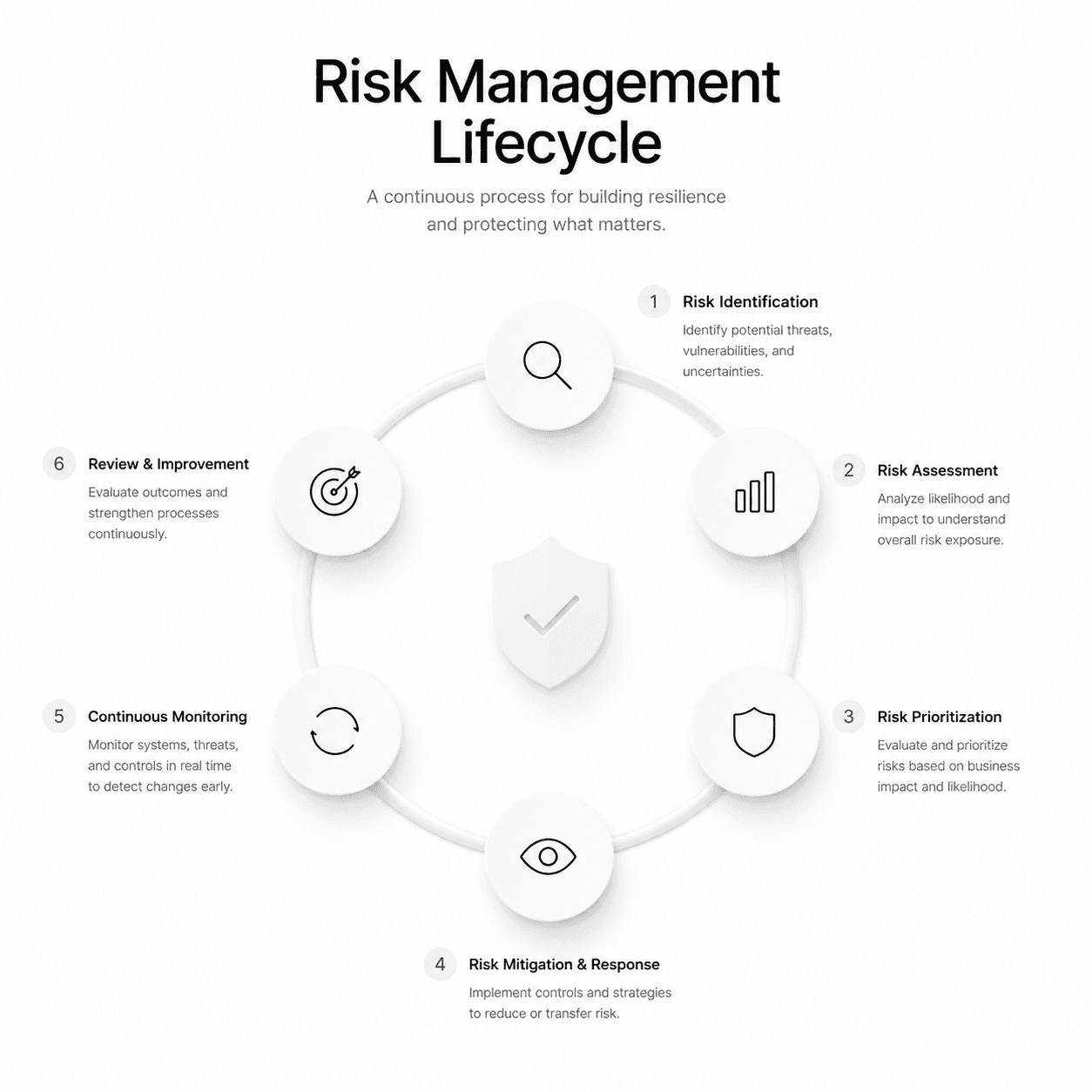
The risk management lifecycle provides a structured and continuous approach to identifying and managing cyber risks across an organization. Rather than treating security as a one-time process, it recognizes that threats, technologies, vulnerabilities, and business environments constantly evolve.
As a result, cybersecurity risk management must also remain continuous and adaptive.
1. Risk Identification
The first stage of the lifecycle focuses on identifying potential risks and understanding what could negatively affect an organization’s systems, assets, operations, or data.
This includes identifying:
vulnerabilities in infrastructure
exposed systems or services
weak authentication practices
human-related risks
third-party dependencies
insider threats
emerging attack techniques
and external threat actors
At this stage, organizations attempt to understand what assets are most valuable and what potential threats may target them.
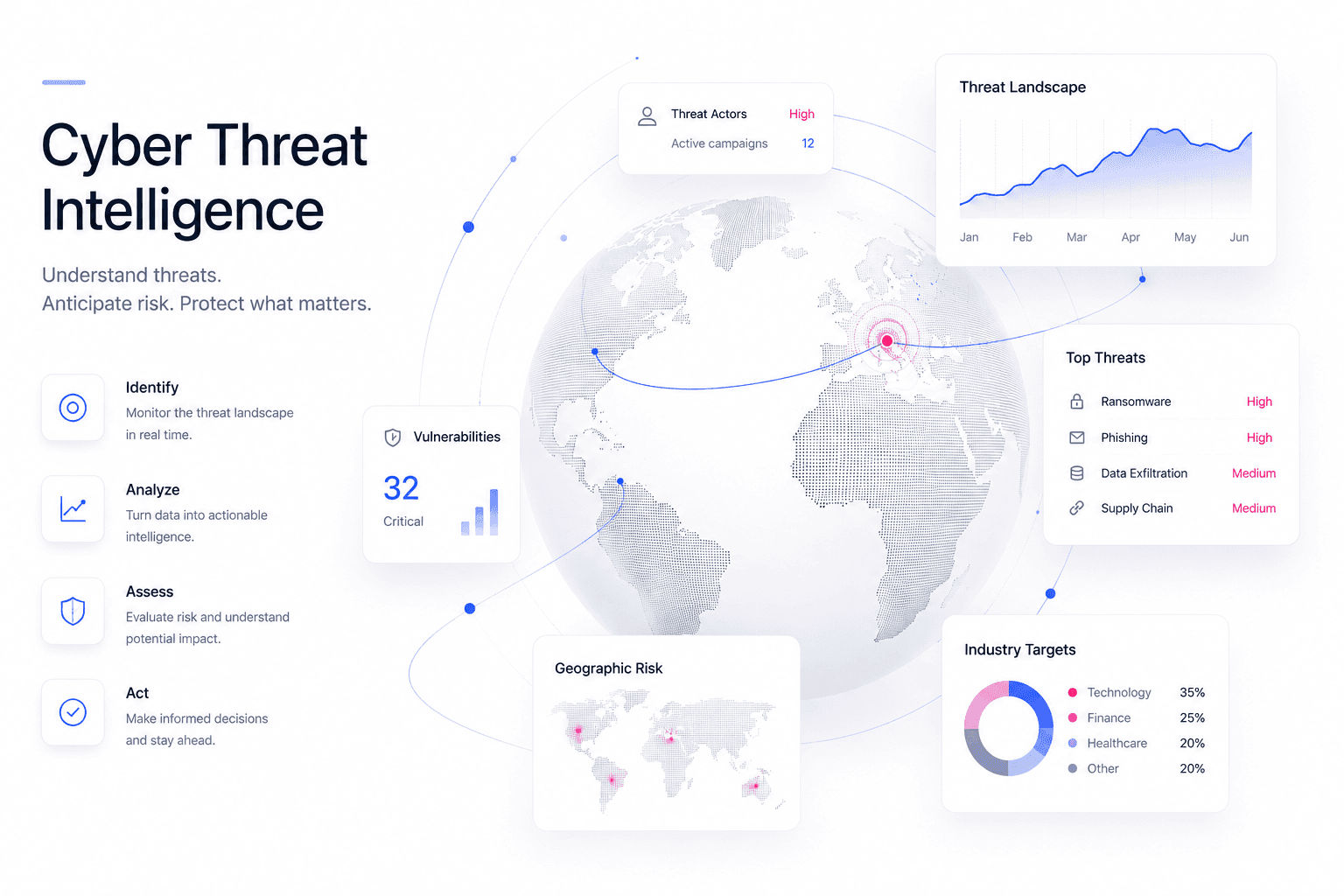
Threat Intelligence (CTI) often plays an important role here by helping organizations better understand attacker behavior, threat trends, and evolving tactics used by cybercriminal groups.
Without proper visibility into risks, organizations may struggle to prioritize security efforts effectively.
2. Risk Assessment and Analysis
Once risks are identified, organizations need to evaluate their potential impact and likelihood.
Not all risks carry the same level of severity.
Some vulnerabilities may have minimal business impact, while others could disrupt critical operations, expose sensitive data, damage reputation, or create significant financial losses.
Risk assessment helps organizations answer questions such as:
How likely is this threat to occur?
What systems or processes could be affected?
What would the business impact look like?
Which assets are most critical?
Are current security controls sufficient?
This stage transforms technical findings into business context.
Cybersecurity decisions are often more effective when organizations understand not only the technical issue itself, but also its operational and strategic implications.
3. Risk Prioritization
Modern organizations face an overwhelming number of vulnerabilities, alerts, and potential threats.
Because resources are always limited, organizations cannot address everything simultaneously.
This is why prioritization becomes essential.
At this stage, risks are ranked based on factors such as:
potential business impact
likelihood of exploitation
threat actor activity
exposure level
regulatory implications
and operational importance
Prioritization allows organizations to focus security efforts on the areas that present the greatest overall risk.
In cybersecurity, effective prioritization is often more valuable than attempting to address every issue equally.
4. Risk Mitigation and Response
Once critical risks are prioritized, organizations implement controls and strategies designed to reduce exposure and improve resilience.
This may involve:
patching vulnerabilities
strengthening authentication
implementing network segmentation
improving monitoring
deploying IDS/IPS systems
employee awareness training
access control improvements
incident response planning
or adopting Zero Trust principles
Risk mitigation does not always mean eliminating a risk completely.
In some cases, organizations may choose to:
reduce the risk
transfer the risk
accept the risk
or avoid certain activities entirely
The approach depends on business objectives, resources, and overall risk tolerance.
5. Continuous Monitoring
Cybersecurity risk management is not static.
Threats evolve continuously, attackers adapt quickly, and technologies change rapidly.
This means risk management must remain ongoing rather than reactive.
Continuous monitoring helps organizations:
detect suspicious activity
identify new vulnerabilities
monitor threat intelligence
track system changes
and evaluate the effectiveness of existing controls
Modern cybersecurity increasingly relies on visibility and adaptability.
Organizations that continuously monitor their environments are often better positioned to detect threats earlier and respond before incidents escalate.
6. Review and Improvement
The final stage of the lifecycle focuses on evaluating security processes and improving resilience over time.
Following incidents, audits, or assessments, organizations analyze:
what worked effectively
what failed
where visibility was lacking
and which improvements are necessary
Cybersecurity is an evolving discipline.
As technologies, attack methods, and business operations change, organizations must continuously adapt their risk management strategies accordingly.
Lessons learned from previous incidents often become some of the most valuable inputs for future resilience.
Why the Risk Management Lifecycle Matters
In many ways, the risk management lifecycle helps organizations move from reactive cybersecurity toward a more proactive and strategic security posture.
Rather than responding only after incidents occur, organizations can better understand:
where their highest risks exist
how attackers operate
which assets require the greatest protection
and how security decisions align with business objectives
As digital transformation, AI adoption, cloud environments, and interconnected infrastructure continue to expand, effective cybersecurity risk management becomes increasingly important not only for protecting systems, but also for maintaining operational continuity, trust, and long-term business resilience.
Because in modern cybersecurity, understanding risk is often just as important as understanding technology itself.
References
NIST Cybersecurity Framework (CSF)
ISO/IEC 27001 - Information Security Management Systems
ISO 31000 - Risk Management Guidelines
ENISA - Cyber Risk Management & Threat Landscape Reports
IBM Security - Cyber Risk & Incident Response Reports
Gartner - Cybersecurity Risk Management Research
SANS Institute - Risk Management & Security Operations Resources
Verizon - Data Breach Investigations Report (DBIR)
CIS (Center for Internet Security) - Critical Security Controls
Microsoft Security - Risk Management & Zero Trust Architecture Resources
Continue Reading